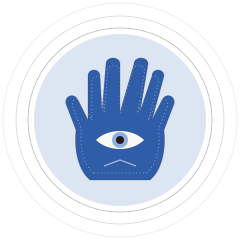
Hamsa
An open right hand, often with an eye in the palm, worn and hung in homes by Jewish and Muslim families across North Africa and the Middle East. “Hand of Fatima” is a later European name for it.
Source: Hamsa (Wikipedia) ↗Read the full storyJewellery shops give every charm a meaning. We checked eleven of the most popular against old books, museum objects and scholars. 4 have centuries behind them. 5 got their meaning from jewellery brands — which is fine, as long as you know which is which.
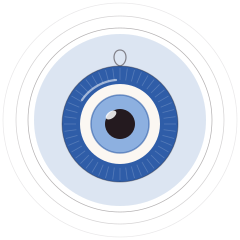
An open right hand, often with an eye in the palm, worn and hung in homes by Jewish and Muslim families across North Africa and the Middle East. “Hand of Fatima” is a later European name for it.
Source: Hamsa (Wikipedia) ↗Read the full storyThe “evil eye” is someone else’s envious look — not the charm. The blue glass eye was hung to “return the gaze”, as Oxford’s Pitt Rivers Museum puts it. Wisdom and wealth are not part of the tradition.
Source: Pitt Rivers Museum, Oxford ↗Read the full storyIn 1620 John Melton wrote that anyone who finds “foure-leaued grasse” in the fields “shall in a small while after finde some good thing”. More than 400 years of the same small wish.
Source: Melton, Astrologaster (1620), via Word Histories ↗Read the full storyIn 1455 Johannes Hartlieb described people drying a goose’s breastbone after St Martin’s Day to forecast the winter. By the early 1600s two people pulled it apart, and the one left holding the bigger piece made a wish.
Source: Furcula (Wikipedia, citing Hartlieb) ↗In ancient Egypt the goddess Ma’at wore an ostrich feather, and in the Book of the Dead a person’s heart is weighed against it. So “truth” has real roots — but it was a scene of judgement, not a charm people wore.
Source: Book of the Dead of Hunefer, British Museum (Google Arts & Culture) ↗Roman girls wore a crescent-shaped pendant, the lunula, as an amulet against harm; the playwright Plautus mentions a gold one given on a birthday. “Enlightenment” is a modern label.
Source: Lunula (Wikipedia, citing Plautus) ↗A plain circle has meant many things in many places. We found no single old tradition behind an “infinity” circle charm — that label comes from jewellery brands.
No early record foundIn religious art a halo marks a holy person. As a ring-shaped charm meaning “eternity”, we found no early record.
No early record foundIn old myths the thunderbolt belongs to sky gods such as Zeus. “Creativity” is a modern jewellery meaning; we found no early record of it.
No early record foundThe sun is one of humanity’s oldest images, but we found no single sun-charm tradition behind “revival”. An old image with a new label.
No early record foundWe found no early record of a dew-drop charm or its meaning. A pretty shape with a modern label — lovely to wear, just not ancient.
No early record foundWe share what a charm has meant and how people used it. We don’t promise what it will do. Found an older source? Tell us and we’ll update the page [contact address TBC].
The card tells the person you give it to where the symbol comes from — or, honestly, that its meaning is modern.