Made by hand in our partner workshop in China  ·  Shipped worldwide  ·  Every symbol comes with its sources
Atlas  /  Against the dark  /  Haint blueNo. 111
Plate INorth America & Arctic · Georgia and South Carolina (Gullah Geechee)Haint blue, drawn by Wishlore
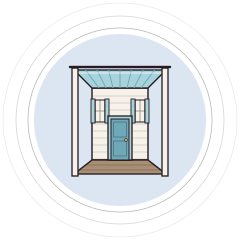
Pl. IHaint blue. A porch seen head-on: the porch ceiling, the door and the shutters painted pale blue, the clapboard walls and posts left white. Drawing: Wishlore.
No. 111  ·  Against the dark  ·  North America & Arctic

Haint blue

A pale blue-green painted on porch ceilings in the American South. Among the Gullah of Georgia and South Carolina it was also painted on doors, window frames and shutters, to keep haints, or ghosts, away from the home: the blue was meant to look like water, which ghosts could not cross, or, some say, like the sky.

Earliest record
Blue ceiling in the slave quarters, Owens–Thomas House, Savannah (house built 1816–1819)
Source
Wikipedia, Owens–Thomas House
Region
North America & Arctic · Georgia and South Carolina (Gullah Geechee)
Wish
Against the dark
Layers
Record Folk Modern
The story · three layers

The story, in three layers.

Record, Folk and Modern are kept apart, and each one carries its source.

I
Record
Savannah, Georgia, 19th century

A ceiling in Savannah

In Savannah, Telfair Museums runs the Owens–Thomas House, begun in 1816 and finished in 1819. During a renovation of its carriage house in the 1990s, one of the oldest and best-preserved urban slave quarters in the American South was uncovered there, and the ceiling of the quarters is painted haint blue. We could not find when the blue was first put on.

To verify: Telfair Museums’ own account of the blue ceiling, in its Collection Highlights (2005), which we know only as cited in an encyclopedia article; When the blue was first painted

II
Folk
Gullah Lowcountry

Spirits that cannot cross water

Haint is another spelling of haunt, long used in African American speech for a ghost. The Gullah painted haint blue to keep haints away from the home: the colour was meant to look like water, which ghosts could not cross, or like the sky, to trick a ghost into passing on. They painted not only the porch but doors, window frames and shutters. The pigment was made from crushed indigo plants. Not all Gullah people share the belief.

To verify: A museum or scholarly source for the Gullah belief itself; the encyclopedia article we used cites press and magazine pieces for it

III
Modern
Today

From the Lowcountry to every porch

As Gullah culture was forced into contact with white Southern culture, the custom spread, and haint blue is now a familiar porch-ceiling colour across the South, often chosen simply because it looks like the sky. Some Gullah Geechee artists and teachers have taken up indigo dyeing again, to strengthen ties with their ancestors’ African culture. We tell this as Gullah Geechee history, and make no promise that a colour keeps anything out.

Haint blue
Blue ceiling in the slave quarters, Owens–Thomas House, Savannah (house built 1816–1819)
Story and sources on the reverse
Pl. IIThe story card. Every printed piece carries the story and a code that opens the full source list.
Keep it close

How would you like to keep it?

Add to bag · £8
  • No jewellery for this symbol yet; story card and download only
  • Printed cards are made in our partner workshop in China and shipped worldwide
  • Delivery: [UK/EU/US days TBC]; duties shown at checkout
In one breath
A ceiling the colour of water, over the door of the house. Who would you keep it for?