Made by hand in our partner workshop in China  ·  Shipped worldwide  ·  Every symbol comes with its sources
Atlas  /  For a new job  /  Hiring-fair tokenNo. 91
Plate IBritain & Ireland · English market townsHiring-fair token, drawn by Wishlore
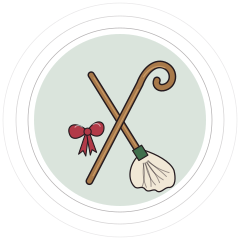
Pl. IHiring-fair token. A shepherd’s crook and a housemaid’s mop, crossed: two of the trade signs held at hiring fairs, beside a bow of the bright ribbon worn once hired. Drawing: Wishlore.
No. 91  ·  For a new job  ·  Britain & Ireland

The hiring-fair token

At the old hiring fairs of Britain and Ireland, people looking for a year’s work stood in the street with a sign of their trade: a shepherd’s crook, a wisp of straw, a housemaid’s mop. Once hired, they took the sign off and wore bright ribbons.

Earliest record
Hardy’s Casterbridge hiring fair, 1874
Source
Thomas Hardy, Far from the Madding Crowd (1874), chapter 6, Project Gutenberg text
Region
Britain & Ireland · English market towns
Wish
For a new job
Layers
Record Folk Modern
The story · three layers

The story, in three layers.

Record, Folk and Modern are kept apart, and each one carries its source.

I
Record
England, 1874

Hardy’s hiring fair, 1874

In Far from the Madding Crowd (1874), Thomas Hardy describes the yearly ‘statute or hiring fair’ in the county town of Casterbridge. Two or three hundred labourers wait in the street: carters with whip-cord twisted round their hats, thatchers with a piece of woven straw, shepherds holding their crooks, ‘and thus the situation required was known to the hirers at a glance’.


II
Folk
Britain and Ireland, 1351 to the 20th century

Crook, straw, mop and shilling

Hiring fairs, also called statute or mop fairs, are traced to the Statute of Labourers of 1351. Shepherds held a crook or a tuft of wool, cowmen brought wisps of straw, dairymaids a pail and housemaids a broom or mop; this is one explanation given for the name ‘mop fair’. A shilling, the ‘fasten-penny’, sealed a year’s hire; then the sign came off and bright ribbons went on.

To verify: The 1351 date, the fasten-penny and the ribbons, checked in a printed source such as Simpson and Roud’s Dictionary of English Folklore (2000)

III
Modern
England, today

A fair without the hiring

Traditional hiring fairs had ended by the middle of the 20th century, but Stratford upon Avon, Tewkesbury, Warwick and other towns still hold a ‘mop’ each year around Michaelmas, now a fair of rides and lights. Wishlore note: we tell the token as the sign of someone standing in the street, waiting to be chosen for a year’s work.

Hiring-fair token
Hardy’s Casterbridge hiring fair, 1874
Story and sources on the reverse
Pl. IIThe story card. Every printed piece carries the story and a code that opens the full source list.
Keep it close

How would you like to keep it?

Add to bag · £8
  • No jewellery for this symbol yet; story card and download only
  • Printed cards are made in our partner workshop in China and shipped worldwide
  • Delivery: [UK/EU/US days TBC]; duties shown at checkout
In one breath
A crook in the hand meant: shepherd, looking for work. Who would you keep it for?