I
RecordJapan, 10th c.
The onmyōji’s seal
Abe no Seimei (921–1005) was an onmyōji. The five-pointed star was his seal and later the emblem of the Onmyōryō. Seimei Shrine in Kyoto was founded in 1007.
A five-pointed star drawn in one stroke: the seal of Abe no Seimei in 10th-century Japan, and a mark ama divers still draw on their work clothes.
Record, Folk and Modern are kept apart, and each one carries its source. Spotted a better source? Tell us.
Abe no Seimei (921–1005) was an onmyōji. The five-pointed star was his seal and later the emblem of the Onmyōryō. Seimei Shrine in Kyoto was founded in 1007.
Ama divers in Mie mark their work clothes with the seiman, a star drawn in one stroke that stands for returning safely, and the dōman, a grid they describe as many eyes watching for evil spirits.
A five-pointed star was also scratched at Gainsborough Old Hall in England (English Heritage, 2024). We draw it whole, in one line, five points on the ring. We do not copy shrine-issued omamori. A couple pair is offered: two whole stars whose outer rings clip together.
It opens with the pencil construction, then follows the record, how people used it, and the piece we make today. Every fact in it comes from the sources on this page.
Sterling, gold-plated silver with lab-created stones, and a fully handmade atelier piece. Every tier keeps the symbol whole and true to its source.
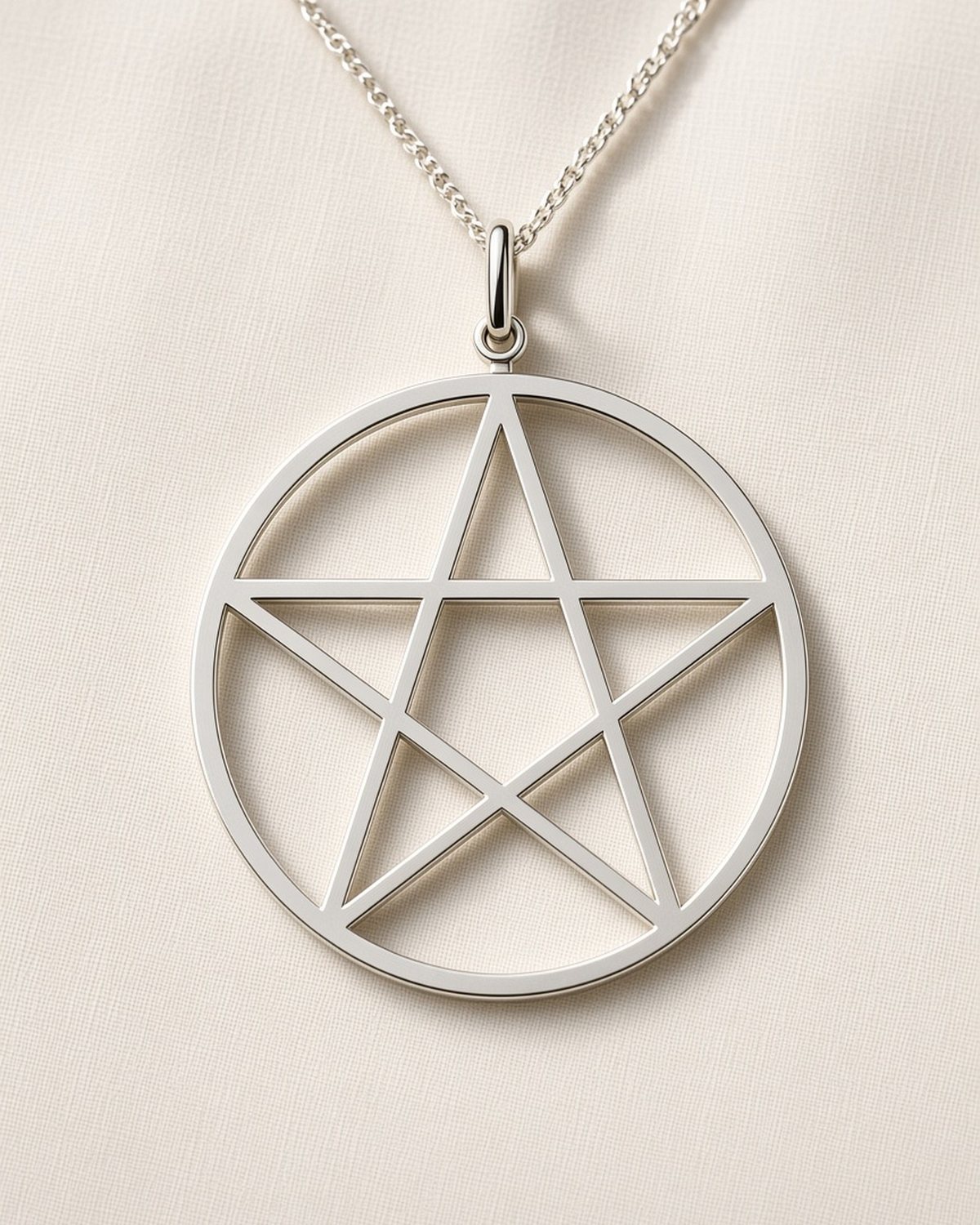
925 sterling. One continuous line, five points touching a thin outer ring, satin openwork.
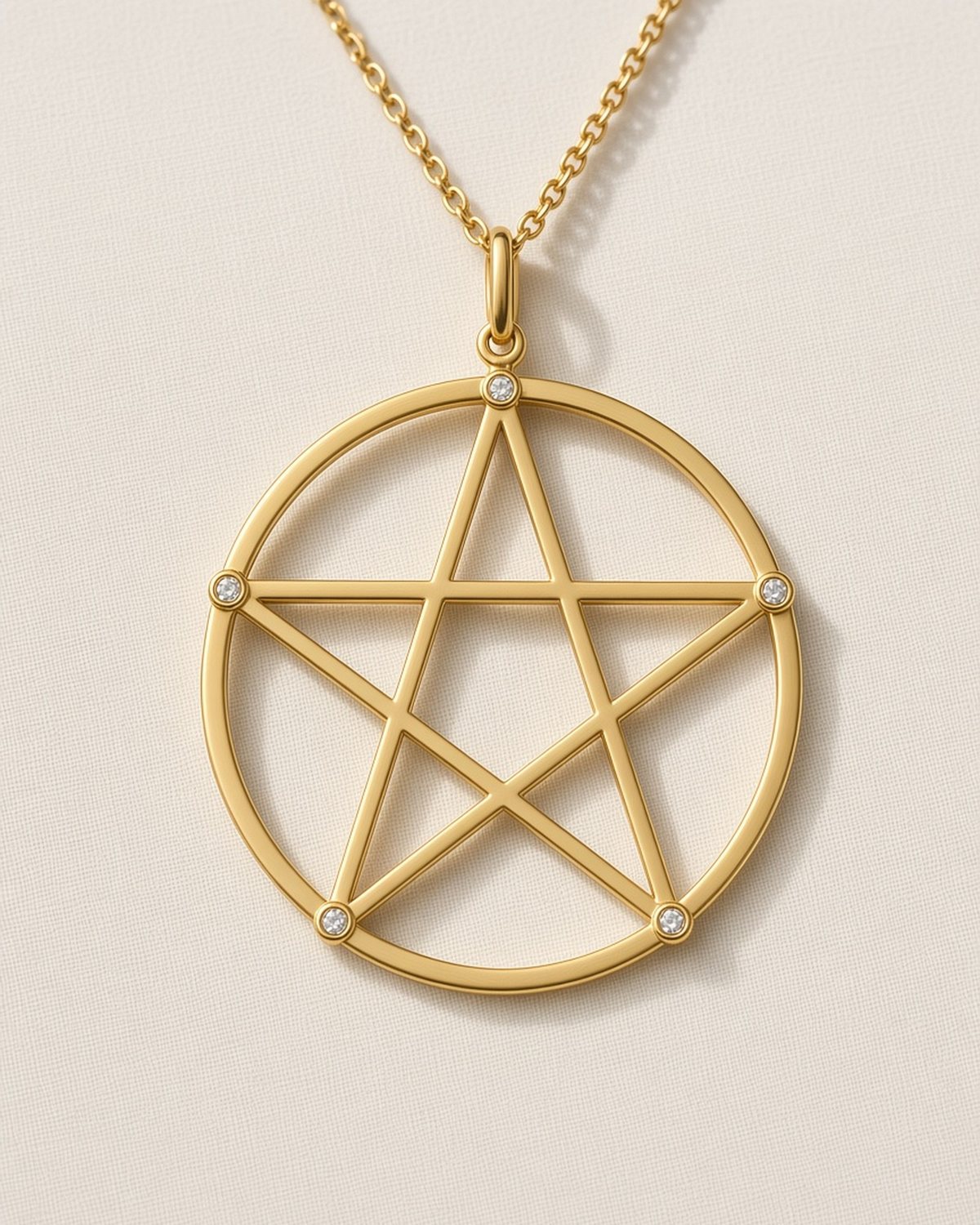
Gold-plated 925 sterling silver (vermeil) — openwork star with a lab-created white stone at each of the five points.
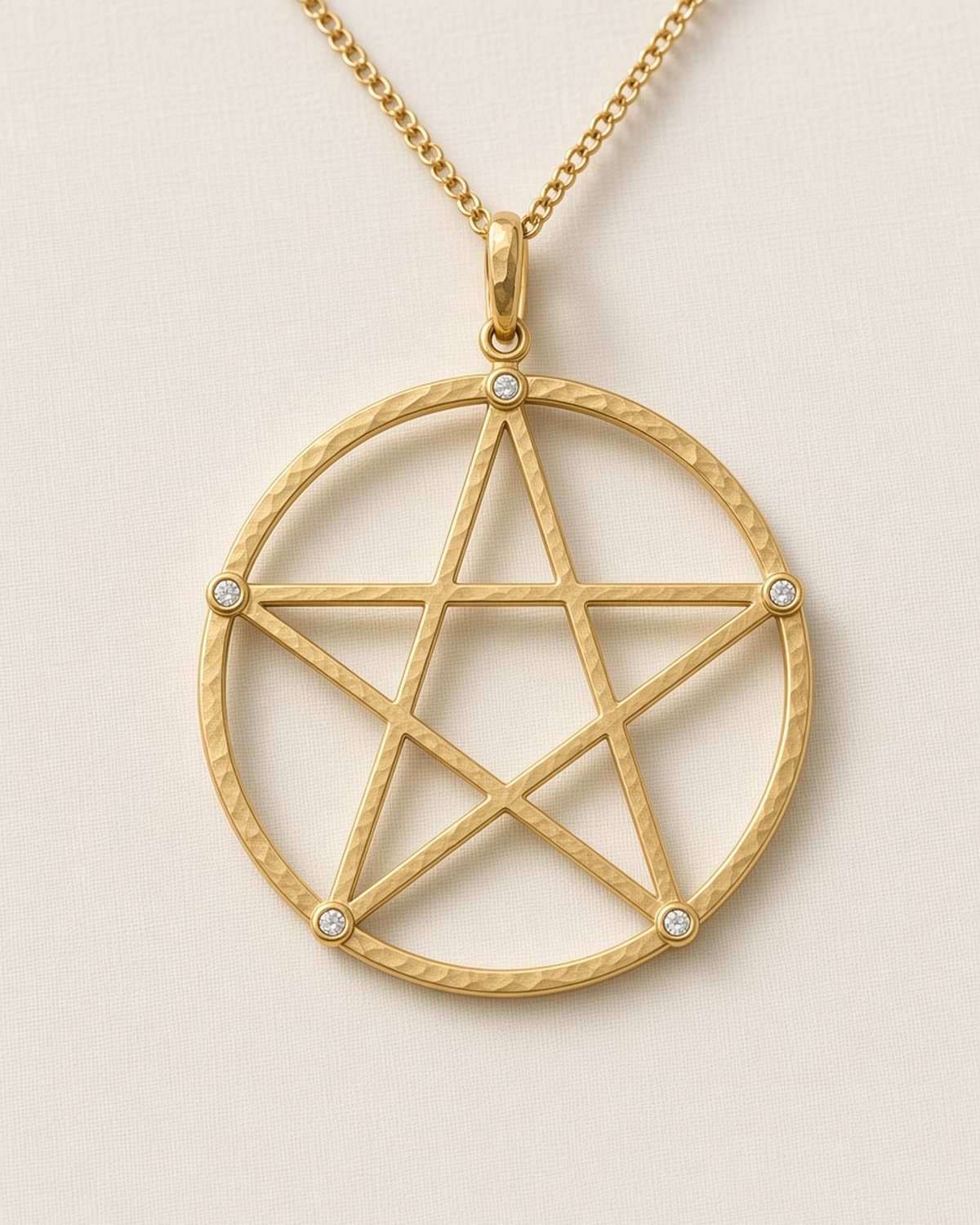
Hand-hammered outer ring in gold-plated 925 sterling silver; the star pavé-set with lab-created white stones. Made to order.