Made by hand in our partner workshop in China  ·  Shipped worldwide  ·  Every symbol comes with its sources
Atlas  /  For courage  /  Boar-tusk breast ornamentNo. 113
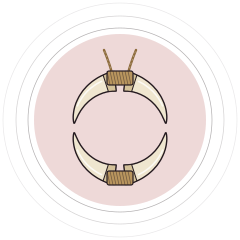
Plate IOceania · Papua New GuineaBoar-tusk breast ornament, drawn by Wishlore
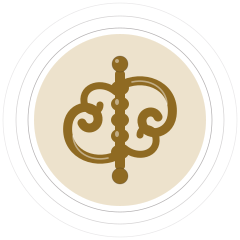
Pl. IBoar-tusk breast ornament. Four curved boar tusks in two pairs, their broad ends bound with woven fibre at the top and the bottom, hung from a fibre cord. Drawing: Wishlore.
No. 113  ·  For courage  ·  Oceania

The boar-tusk ornament

Curved boar tusks, bound together and worn on the chest in New Guinea. A London museum catalogues one as a charm, worn to give the strength and bravery of a wild boar. The same museum bought a Mekeo chief’s four-tusk ornament in 1905, and notes that every Mekeo chief inherited two tusk breast ornaments from his father.

Earliest record
Mekeo chief’s tusk ornament bought by the Horniman Museum, 1905
Source
Horniman Museum and Gardens, London: Chief’s boar tusk pendant, Mekeo people (5.88)
Region
Oceania · Papua New Guinea
Wish
For courage
Layers
Record Folk Modern
The story · three layers

The story, in three layers.

Record, Folk and Modern are kept apart, and each one carries its source.

I
Record
Late 19th century; bought by the museum in 1905

A chief’s four tusks

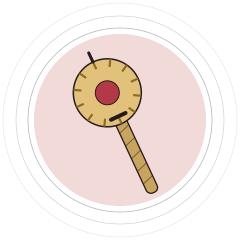
The Horniman Museum in London holds a boar-tusk ornament from the Mekeo people of Central Province, Papua New Guinea. A. E. Pratt collected it among the Mekeo, and the museum bought it from him in 1905. Its four tusks form two loops, joined by a cane spiral set with seeds and white and blue trade glass beads, and two cuscus tails hang from one loop. The museum dates it to the late 19th century and says such tusk ornaments were important and prestigious: every Mekeo chief inherited two tusk breast ornaments from his father. It adds that the Mekeo told a peace-time chief from a war-time chief, and that war-time chiefs were expected to be fierce and unpredictable.

To verify: A Freiburg city museum record of a Papua New Guinea breast ornament set with boar tusks, said to be worn by men on ceremonial occasions as a sign of rank: its page would not open for us, so it is left out.
II
Folk
Undated museum record, New Guinea

The strength of the boar

The Horniman Museum also catalogues a breast ornament from New Guinea as a charm: four boar tusks held symmetrically together with woven plant-fibre binding, with a woven fibre cord. Its record says it was worn to give the strength and bravery of a wild boar, and its label reads: “Boar’s Tusk breast ornament, worn to give the strength and bravery of the wild boar. New Guinea.”

To verify: When and where this charm was made and collected, and which community made it: the record says only “New Guinea”.; A Pitt Rivers Museum (Oxford) page on a Koiari warrior’s ornament edged with boar tusks, said to be held in the teeth in a fight: the page would not open for us, so it is left out.
III
Modern
Wishlore, today

How we tell it

These ornaments belong to the peoples of New Guinea who made and wore them, and they are made of real boar tusk. We show the four-tusk form as a drawing only, to tell its story. We do not make it as jewellery, and the page makes no promise to anyone who looks at it.

Boar-tusk breast ornament
Mekeo chief’s tusk ornament bought by the Horniman Museum, 1905
Story and sources on the reverse
Pl. IIThe story card. Every printed piece carries the story and a code that opens the full source list.
Keep it close

How would you like to keep it?

Add to bag · £8
  • No jewellery for this symbol yet; story card and download only
  • Printed cards are made in our partner workshop in China and shipped worldwide
  • Delivery: [UK/EU/US days TBC]; duties shown at checkout
In one breath
Worn to give the strength and bravery of a wild boar. Who would you keep it for?