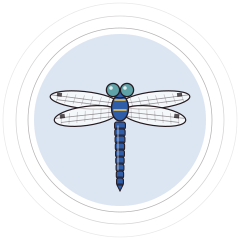
A helmet shaped like a dragonfly
The Minneapolis Institute of Art holds a 17th-century Japanese helmet in the form of a dragonfly: black and gold, with two large gold eyes, two removable pairs of wings and its tail raised. Its label explains that in the 15th and 16th centuries high-ranking lords added sculptural forms to their helmets so that they could be picked out on the battlefield, and that these kawari kabuto, ‘exotic helmets’, let leaders choose a motif that reflected their own character or that of their troops. In Japan, the label says, the dragonfly stands for focused effort and watchfulness, because of the way it moves up, down and sideways while continuing to face forward. The Metropolitan Museum of Art holds a later one: an 18th-century kawari-kabuto topped by a dragonfly, restored in 2015.
To verify: Whether the Met’s own description of its dragonfly helmet calls the dragonfly kachi-mushi and praises the way it hunts, as it is reported to do (we could not open the museum’s page)