Made by hand in our partner workshop in China  ·  Shipped worldwide  ·  Every symbol comes with its sources
Atlas  /  For calm & sleep  /  Egyptian headrest with BesNo. 105
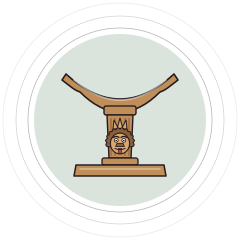
Plate INorth Africa · Ancient EgyptEgyptian headrest with Bes, drawn by Wishlore
Pl. IEgyptian headrest with Bes. A wooden Egyptian headrest: a curved rest for the neck on a fluted column and a flat base, with the plumed, lion-maned face of Bes carved on the column, drawn as an emblem, not a portrait of the god. Drawing: Wishlore.
No. 105  ·  For calm & sleep  ·  North Africa

The headrest with Bes

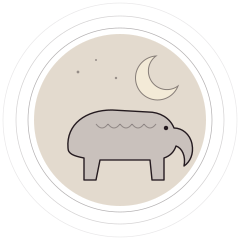
Ancient Egyptians rested the head on a curved headrest of wood or stone, not on a soft pillow. Bes, a squat household god with a lion-like face, and the hippopotamus goddess Taweret were regularly shown on beds and headrests; the two were believed to keep evil forces away. Headrests also went into tombs with the dead.

Earliest record
Bes and Taweret on beds and headrests, 18th dynasty (about 1550–1292 BC)
Source
Wikipedia, Throne of Princess Sitamun
Region
North Africa · Ancient Egypt
Wish
For calm & sleep
Layers
Record Folk Modern
The story · three layers

The story, in three layers.

Record, Folk and Modern are kept apart, and each one carries its source.

I
Record
Egypt, 18th dynasty (about 1550–1292 BC)

On beds and headrests

Egyptians used headrests of wood, and sometimes of ivory or stone, where we would use a pillow. In the 18th dynasty, Bes and Taweret, who has her own page in this atlas, were regularly shown on beds, headrests and chairs, and were believed to fend off evil forces. A chair that belonged to Princess Sitamun, found in the tomb of her grandparents Yuya and Thuya, shows figures of Bes with knives and a tambourine. Elite tombs of the same dynasty were furnished with beds and headrests, among the things the dead had used in life.

To verify: A dated headrest carved with Bes: the Brooklyn Museum lists a wooden headrest with two images of the god Bes, dated about 1539–1190 BC, but we could not open its page to check the date, the carving or the label; The details of the Sitamun chair against the Egyptian Museum’s own record; we read them in an encyclopedia article
II
Folk
Ancient Egypt

A spell for the headrest

Spell 166 of the Book of the Dead is a spell for a headrest and against losing the head. It belongs to the group of spells, numbered 155 to 167, that Wallis Budge in 1920 described as engraved on amulets for the dead. Small headrests went into tombs too: among the iron objects in Tutankhamun’s tomb was a miniature headrest.

To verify: The wording of spell 166 in a standard translation, such as R. O. Faulkner’s

III
Modern
Wishlore, today

How we tell it

We draw a headrest, not a promise of good sleep. Bes was a god of ancient Egypt; we show his face only as headrests carried it, as an emblem, not a portrait. Anything we made would be a new design: we sell no antiquities and nothing taken from a tomb.

Egyptian headrest with Bes
Bes and Taweret on beds and headrests, 18th dynasty (about 1550–1292 BC)
Story and sources on the reverse
Pl. IIThe story card. Every printed piece carries the story and a code that opens the full source list.
Keep it close

How would you like to keep it?

Add to bag · £8
  • No jewellery for this symbol yet; story card and download only
  • Printed cards are made in our partner workshop in China and shipped worldwide
  • Delivery: [UK/EU/US days TBC]; duties shown at checkout
In one breath
A hard pillow of wood, with a fierce little god carved on it. Who would you keep it for?