Made by hand in our partner workshop in China  ·  Shipped worldwide  ·  Every symbol comes with its sources
Atlas  /  For calm & sleep  /  Tiger pillowNo. 107
Plate IEast Asia · Northern China (Cizhou ware)Tiger pillow, drawn by Wishlore
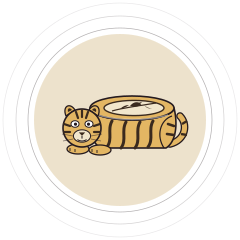
Pl. ITiger pillow. A crouching tiger in ochre clay with dark stripes, its flat back an oval panel painted with a small bird on a bamboo branch. Drawing: Wishlore.
No. 107  ·  For calm & sleep  ·  East Asia

The tiger pillow

A hard pillow of glazed clay in the shape of a crouching tiger, made in the Cizhou kilns of northern China. Pillows from these kilns were often painted with wishes for good sleep. Why a tiger is less certain: one museum label says the tiger frightens away harmful spirits, while another account suggests tiger pillows were simply made for men.

Earliest record
Cizhou ware headrests, mostly 12th–13th century
Source
Wikipedia, Cizhou ware (after Medley, Vainker, Valenstein and Osborne)
Region
East Asia · Northern China (Cizhou ware)
Wish
For calm & sleep
Layers
Record Folk Modern
The story · three layers

The story, in three layers.

Record, Folk and Modern are kept apart, and each one carries its source.

I
Record
Northern China, mostly 12th–13th century

From the Zhang family kilns

Ceramic pillows were among the common products of the Cizhou kilns, and when moulds were used it was mainly for them. Unusually for Chinese pottery, many carry a stamp or an inscription: a large group, mostly of the 12th and 13th centuries, is stamped with the name of the Zhang family workshop in Henan, and at least one tiger-shaped headrest carries that stamp. Other kilns made moulded shapes with a flat panel for the head, and tigers are common among them.

To verify: A dated tiger pillow: the Brooklyn Museum lists one with an inscription giving a date that probably corresponds to 1182 and a price of 31 copper coins, but we could not open its page to check

II
Folk
China

Why a tiger

Cizhou pillows often carry painted inscriptions, and on pillows these typically wish the sleeper good sleep. For the tiger shape there are two readings. The Brooklyn Museum’s label for its tiger pillow says that in Chinese lore the tiger frightens away harmful spirits. The encyclopedia account of the ware that we used says only that tigers were common, ‘presumably for male customers’.

To verify: The Brooklyn Museum’s own wording about the tiger and harmful spirits, which we saw only in a search summary

III
Modern
Wishlore, today

How we tell it

The old pillows are glazed clay and very hard. We draw the tiger and tell its story; we make no promise that a tiger, in clay or in metal, keeps bad dreams away.

Tiger pillow
Cizhou ware headrests, mostly 12th–13th century
Story and sources on the reverse
Pl. IIThe story card. Every printed piece carries the story and a code that opens the full source list.
Keep it close

How would you like to keep it?

Add to bag · £8
  • No jewellery for this symbol yet; story card and download only
  • Printed cards are made in our partner workshop in China and shipped worldwide
  • Delivery: [UK/EU/US days TBC]; duties shown at checkout
In one breath
A tiger to rest your head on. Who would you keep it for?